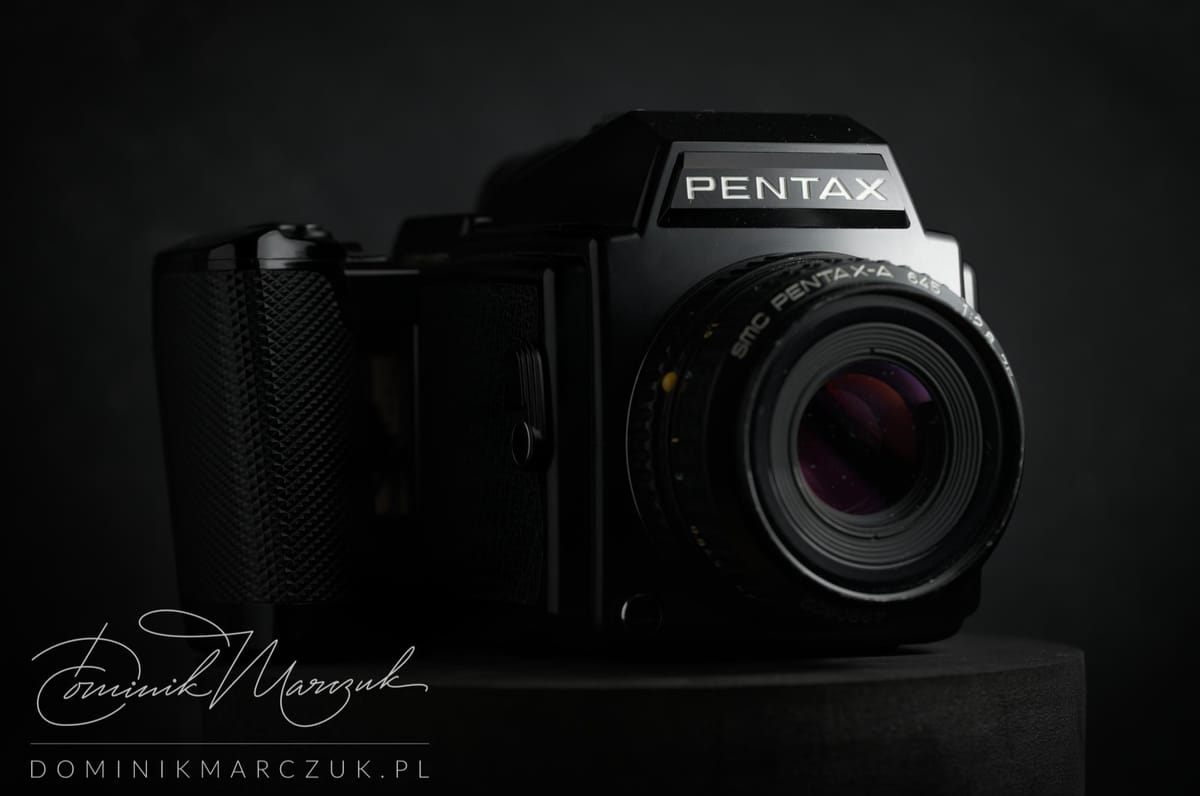
Pentax 645
Here's a review of the camera that introduced me to the world of medium format photography.

When I started playing with film photography around a year and a half ago, I committed to the 35 mm format. I tried out many 35 mm SLRs and curated a selection I can confidently call my "dream team" of cameras.
Still, something was missing. Many sources described the film experience as a transition from 35 mm to medium format, perhaps a more serious medium, and definitely a more demanding one. I dismissed it for a year or so until something changed. Everyone seemed to shoot bigger film formats, from well-known YouTube creators to niche creators with three followers each.
It was a question of time before I transitioned from being dismissive to curious. To make matters worse, I was always a bit thrown off by the prominent grain some film stocks produced in 35 mm. Finally, I made a choice. I bought two medium-format cameras and started playing with them. At the time of writing this paragraph, I still haven't received my first purchase (it needs to cross a border and go through customs). The second one is in my hands though.
Fun fact: I wasn't technically planning to get a Pentax 645. I'd drained my camera budget on the previous purchase. However, a YouTube creator I follow released a video about it and casually mentioned in the comments that the camera was for sale. I snatched it immediately, scraping the bottom of my vacation savings account. The seller was Damian from Grainificent - check his YouTube channel out when you find a moment!

Features
On paper, the Pentax 645 is a fairly standard SLR, just with a larger film and a unique lens mount. Here are a few notable features (not a complete list):
- 6x4.5 cm image using 120 or 220 film; 70 mm film backs were also made, but I don't have one, and I doubt I'll ever need one
- shoots 15 frames on a 120 film roll or 30 frames on 220 film
- motorised film advance
- operates on six AA batteries
- Pentax 645 bayonet mount (accepts newer AF lenses too)
- manual focus
- all exposure automation modes one can imagine
- 15" to 1/1000" shutter speeds, plus bulb mode
- 6-6400 ISO range
- 1/60" flash sync
- horizontal-travelling cloth focal plane shutter
- DOF preview
- threaded shutter button accepting standard mechanical release cords
- illuminated (sort of) external LCD screen showing the mode, shutter speed, exposure adjustment and frame number
- shutter speed and exposure indication displayed using bright LEDs inside the viewfinder
- Somewhat dim but usable ground glass focusing screen; mine has the standard horizontal split view inside a microdiaprism patch, but others were available
- hot shoe
A few features that the Pentax 645 lacks include:
- No waist-level finder, though there's an optional right angle finder available
- No self-timer
- No mirror lockup feature - this one was only added two versions later, in the 645NII.
- No option to squeeze the frames closer to each other (the increased distance makes the 645 shoot 15 instead of 16 images; later models address this)
- No possibility to swap film backs mid-roll - once it's loaded, one has to finish the roll.
Lenses
The Pentax 645 doesn't have as many lenses available as the 35 mm cameras. The standard and short telephoto range is well-covered. Wide-angle lenses exist, but are expensive and somewhat rare. Additionally, really fast lenses are absent from the lineup. The fastest they get is f/2.8, and that's just in the middle of the focal length range.
This is due to physics. The aperture value is the diameter of the diaphragm opening relative to the focal length. The standard lens on the Pentax 645 has a focal length of 75 mm. At f/2.8, its maximum aperture, the diaphragm opening diameter is 75 / 2.8 = 27 mm. That's a rough equivalent of 50 / 1.8 in full-frame terms. Reaching a fast aperture of f/1.4 would require the opening to be well over 5 cm in diameter. Adding all the mechanisms and lens housing on top of that, and we'd have an impractical, heavy and massive lens. Also, the depth of field would be sliver-thin using such a wide aperture, and the image quality would surely break down. Bottom line: very wide apertures are not practical on medium-format cameras.
My unit came with the standard SMC Pentax-A 1:2.8 75 mm. I'm thinking about grabbing a 45 mm and a 150 mm lens in the future, but I plan to master the single lens I own before making the additional purchase. The choice of focal lengths is a compromise between versatility and affordability. Going wider than 45 mm is very expensive, and telephoto lenses tend to get dark. Plus, I don't use telephoto lenses very often, so I can live with the 100 mm equivalent as my longest option.
First Inspection
The camera is huge and heavy. The size is common for all medium-format SLRs, but for someone used to 35 mm, the chunky mirror box is more than prominent. The handle contains the AA batteries, and with the lens on, the whole thing weighs 2 kg. Whether I hand-hold it or have it hanging on a strap, its weight is always noticeable.
I used Grainificent's videos as an introduction to using and loading film into the Pentax 645. The operation is fairly simple once one gets used to it. The buttons have a 1980 feel to them, and the LCD screen is reminiscent of old Casio watches that every cool kid in my school had in 1990.
The image in the viewfinder feels enormous. There's a section in the bottom right corner that obscures the view; the LED light meter indication is there. Most sources online complain about how dim the viewfinder is. I haven't tried it with glass that's slower than f/2.8, but with the lens I have, it's bright enough for me. I might change my mind when I try it with an f/3.5 lens; we'll see.
The Bad
As soon as I fired the shutter, I realised how correct all the reviews were about the noise the Pentax 645 makes. It's a thunderclap with zero stealth ability. The mirror moving up and down, the shutter being fired and cocked, the film roll advancing - all of these combined make an ungodly noise that lasts over a second, slowly fading out as some of the internal mechanisms stop vibrating and whirling. I'm sure to scare all the squirrels away when I take a shot (also, the term "shot" is somewhat precise, given the gunshot-like noise). Still, I find the sound oddly satisfying. It's a proud announcement that I've just taken a picture, and I'm not ashamed of it. The only thing missing is a cash register's "ka-ching!" at the end, indicating how much I've just spent on the frame. Yes, the per-frame cost of shooting medium format film is considerable.
The Pentax 645 is a camera that calls for a tripod, and a sturdy one. I wouldn't trust my grip's steadiness at any speed below 1/125"; the camera is simply too heavy. There are tripod mount threads on the bottom and the side, but I prefer to use a generic L-bracket. Given the mirror box's cubic shape, the bracket fits like a glove. Using a ball head with an Arca Swiss plate is a bit of a hassle since the camera's prominent rear covers the tightening screw. It's not a big deal though; it's just a little more finicky to tighten or loosen the quick-release screw. The weight can also be an issue when taking photos on an extended central column, even in not very windy conditions. I happen use a super sturdy tripod, so I'm probably quite safe, but a lighter travel tripod will wobble with such a heavy boy on top of it.
The viewfinder's eyecup is a bit meh. I find that I need to adjust the position of my eye every time to avoid seeing one part of the image go dark. It slows me down a tiny bit. I can live with it though. The speed at which I can compose and take a photo is still quite comparable to any 35 mm camera.
Another thing I don't love is the button layout. The most commonly used buttons are the up and down arrows, which change the shutter speed or aperture. They're positioned in a way that makes it hard for me to find them by feel; I end up taking my eye away from the viewfinder to locate them. It's a matter of getting used to it, but since the Pentax 645 is not my main workhorse, I don't think I'll ever gain the muscle memory. Again, it's a very minor complaint.
Finally, there's the somewhat cursed shutter button. It's very sensitive, so even a light press can fire a shot; I've done it on my first roll. There's no tactile feedback indicating the position at which the light meter is engaged. Things get even worse when the shutter release cord is screwed into the button. Oh, how useful a self-timer would have been! This is by far my biggest complaint about the Pentax 645.
The Good
All woes aside, the camera is otherwise a joy to use. I love the crazy depth of field capabilities - this thing can melt backgrounds even at f/5.6 due to the longer focal length. It's a completely different experience from using a 50 mm lens on a 35 mm SLR, despite the field of view being roughly similar. I enjoy the new possibilities the medium format opens before me. Every shot feels a bit more special.
The 4:3 aspect ratio is also fairly close to the 3:2 I'm used to. This lets me focus on other aspects of taking the photo without worrying about the composition too much. It's also a good intermediate step between 35 mm photographs and 6x6 square images.
Despite the camera's heft, it's light enough to carry around through a forest. I'm not sure if I'll be able to say the same thing about the sling bag laden with additional lenses, but I've walked around with the Pentax 645 on the tripod over my shoulder and another camera in the bag, and my back has survived. I wonder if I'll be able to squeeze the additional lenses into my waist bag?
After having my first rolls developed, I was left with some crazy high-resolution images to scan. The image quality is beyond compare: despite producing the smallest medium format frames out there, the Pentax 645 delivers images that surpass anything the 35 mm negative can achieve. When scanned, the grain is much finer at the same resolution, and sharpness and detail are resolved much better. Paired with the shallower depth of field, the Pentax 645 addresses all of the issues I've experienced with small-format SLRs.
Conclusion
I've listed all the downsides of the Pentax 645, and I don't perceive any of them as a deal breaker. On the other hand, the pros can't be argued with. The camera makes great images (even though it's the smallest of medium format frame sizes, and thus, there are higher-quality pictures to be taken), and it's easy enough to use.
Plus, it's simply enjoyable. It feels good to shoot it. The per-image price of the film is high enough to make me contemplate each scene even longer, which potentially can result in better photos; I'm more connected to the images I make. At the same time, I don't regret wasting a shot or two, as 15 photos are plenty. If I come back with a single good image on average, I'll be content; if it's two, I'll be in photo heaven.
Example Images
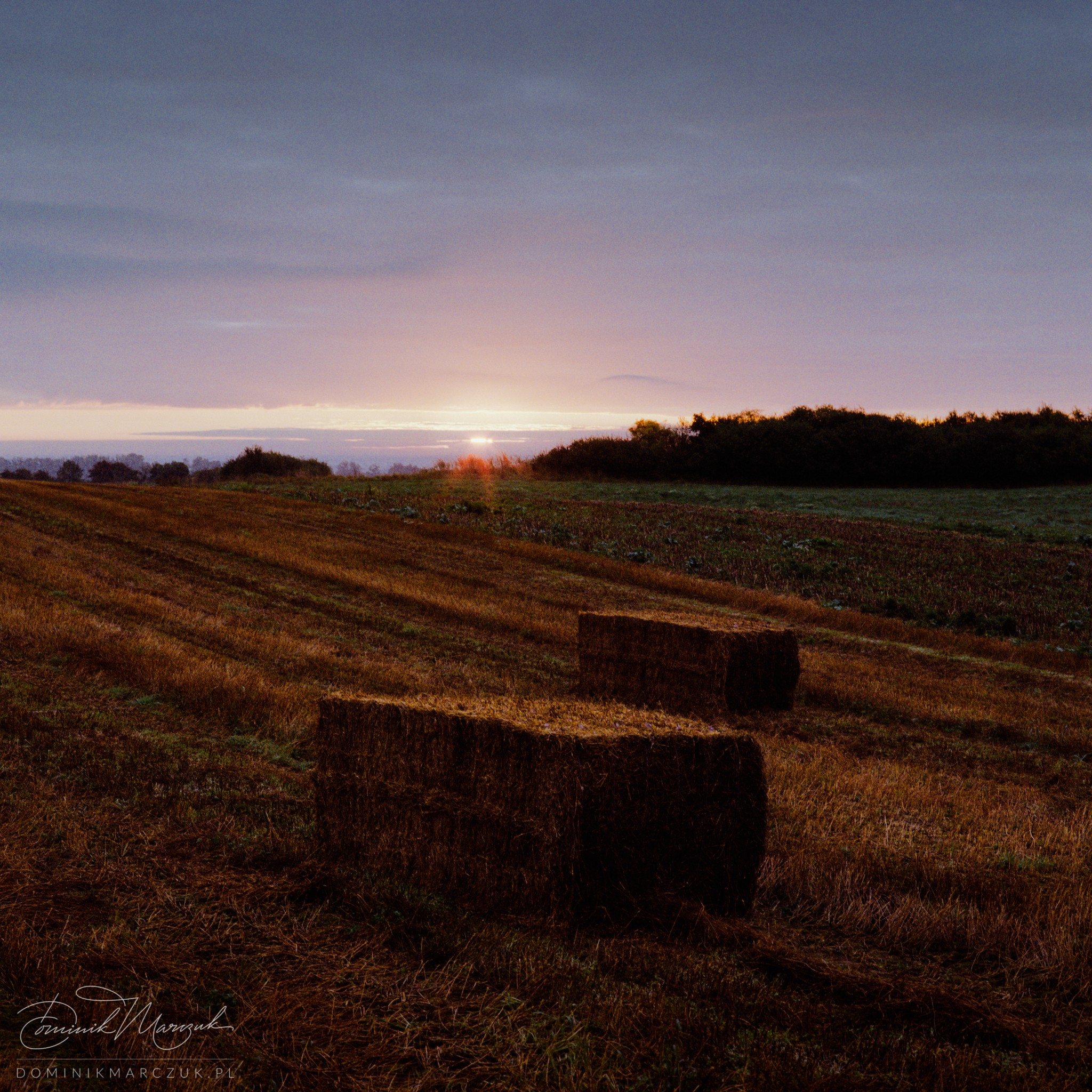
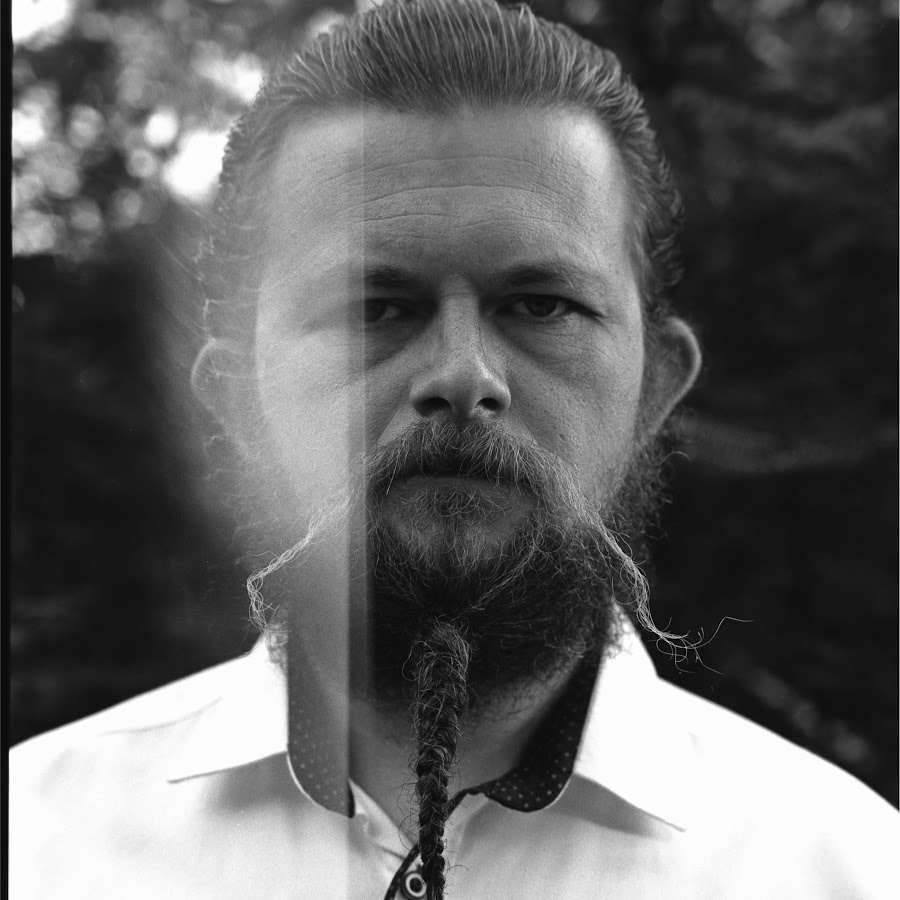
As usual, a disclaimer: it's not the camera body that makes a photo; it's the lens, the film and the photographer. That being said, here are some of the images I've taken with the Pentax 645.