Back to Digital
What is it like to get back to digital photography after over a year of shooting analogue only?

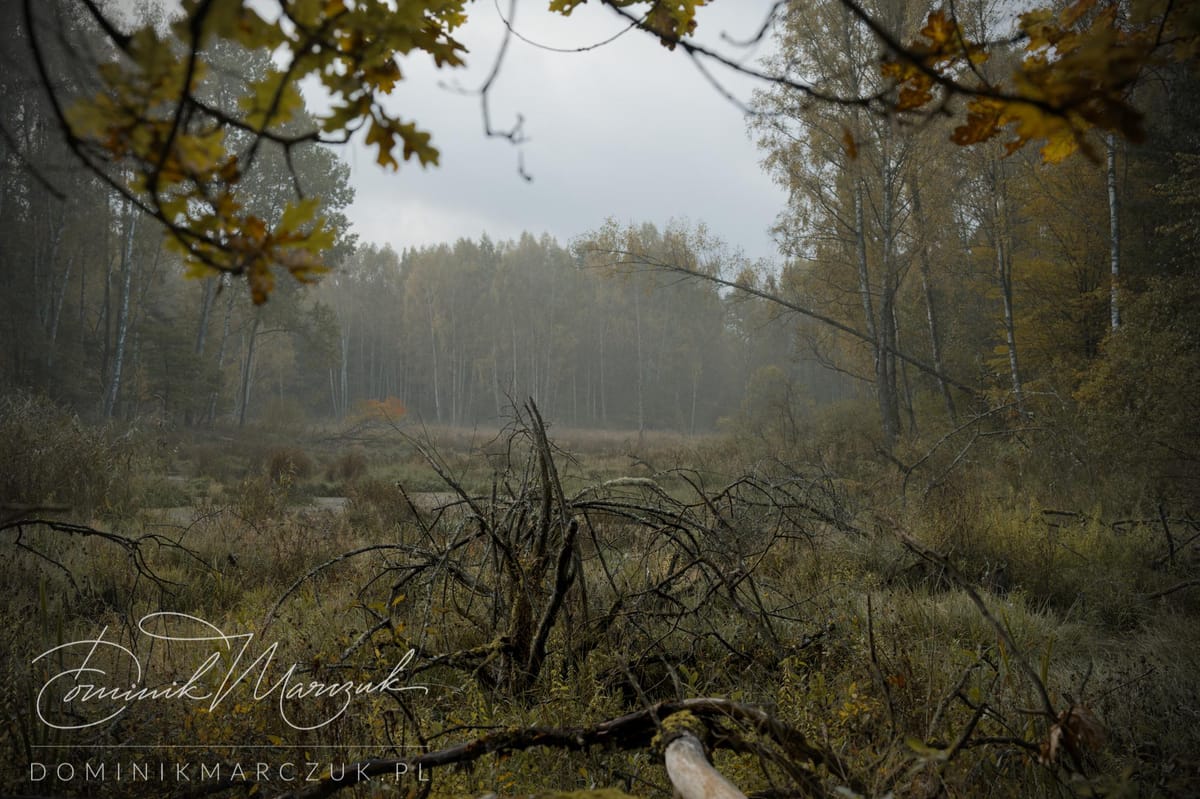
On the second weekend of October, I headed back to the forests and swamps around Kolonia Linowo to capture some autumn colours. The weather forecast wasn't particularly promising - dull, overcast, cold, with a persistent threat of light drizzle. I also knew up front that I wouldn't have time for a long, wide-ranging hike.
I decided against bringing an analogue setup this time. Wanting to pack light meant medium format was out of the question, and I knew I’d struggle to finish all 36 exposures on a 35mm roll - not a complete dealbreaker, but I prefer completing a roll in a single outing whenever possible.
It had been roughly fifteen months since my digital camera served as anything other than a film-scanning rig. I finally decided to dust off the Nikon Z7, pairing it with a single zoom: the Nikkor Z 24-120 mm f/4. No ultra-wides, no primes. The only accessory attached was a circular polariser, which stayed glued to the glass the entire trip. Most of the weight in my pack was simply a thermos of warm fruit tea and a sandwich.
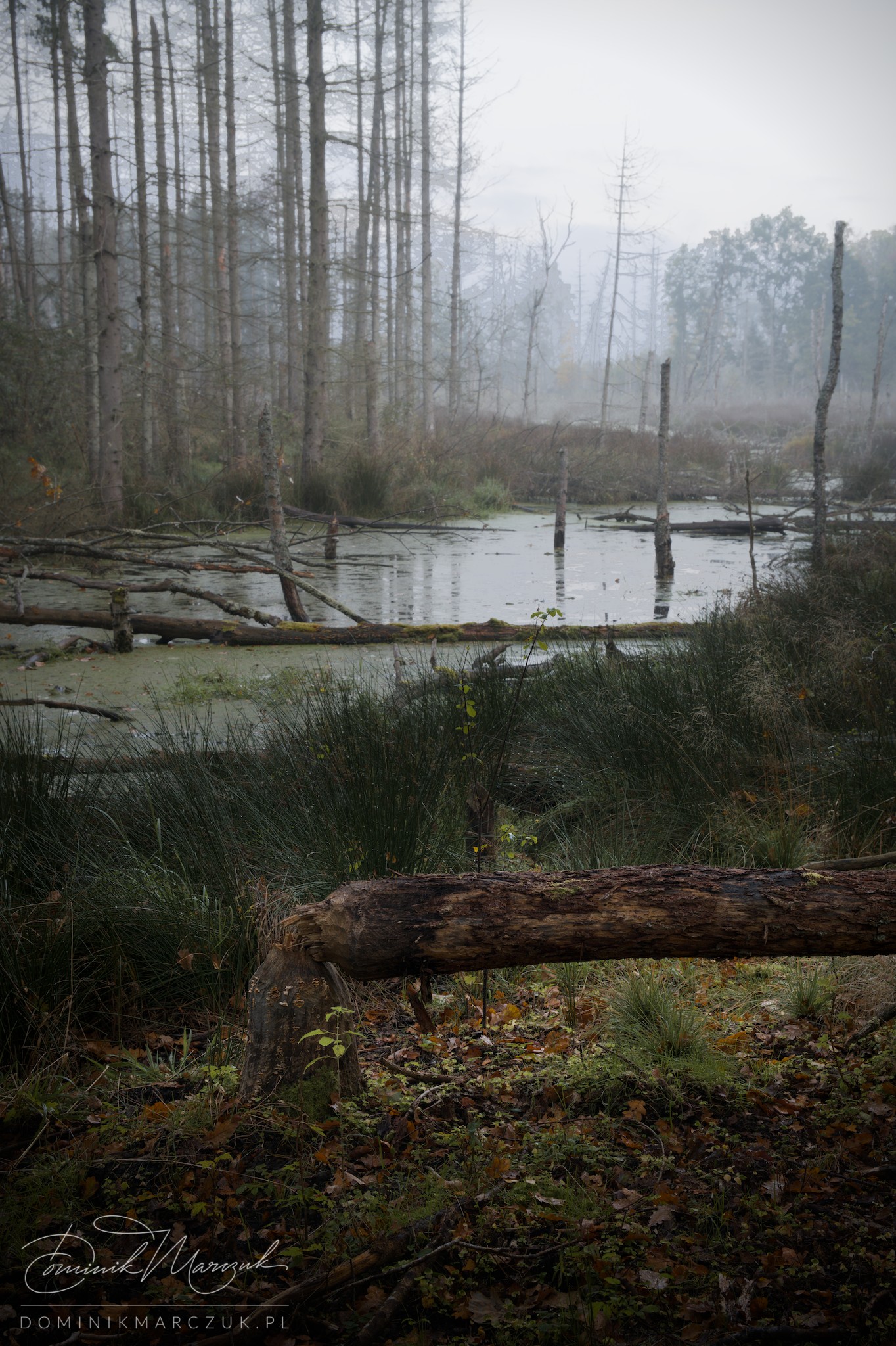
The autumn landscape didn’t entirely deliver on its seasonal promise. The woods in this area are predominantly coniferous, lacking the fiery maples that usually define autumn imagery. Instead, I worked with scattered yellowing birches, muted brown oak foliage, and a few standing dead trees. The saving grace was a delicate layer of mist hanging over the swamps, which lent a quiet, atmospheric mood to a few frames.
I'll be honest: the photos weren't mind-blowing. They turned out fine, but having walked these paths dozens of times, I found myself battling a familiar sense of routine. What did surprise me, however, was how much my shooting process had evolved.
Conditioned by months of shooting film, I slowed down. Instead of falling back on the digital habit of continuous shooting, I treated each frame deliberately, ending up with only about fifteen distinct subjects. To my surprise, the hit rate was exceptionally high. While they might not be career-defining portfolio pieces, a solid third of the images were genuine keepers by my standards - an unusually high success rate compared to past digital outings.
In the past, a digital walk like this would yield hundreds of files, often ten versions of the exact same angle, leading to tedious sorting, culling, and pixel-peeping at home. This time, I walked away with around forty frames total.
My evaluation process on the trail had fundamentally changed. I scrutinised compositions far more critically, rejecting twice as many scenes as I actually shot, often before even unbuckling the tripod. When a scene passed muster, I took my time adjusting the framing, committed to the best option, and released the shutter just once. Well, technically two or three times, as I bracketed exposures to handle the bright sky, and in one instance I shot both a vertical and horizontal orientation - the horizontal winning by a hair.
Ultimately, the experiment felt like a success. I returned home with a high proportion of images I felt good about, free from the constraints of finishing a roll or the paralysis of digital abundance. I took precisely as many frames as the scene demanded - nothing more, nothing less.
The only real friction came from relying on the rear LCD. While working off the screen felt freeing compared to pressing an eye to an optical viewfinder of an SLR or peering down into a waist-level finder, it brought its own quirks: constantly reaching for my reading glasses to check composition, while navigating UI overlays and histograms blocking the view. It’s a muscle memory detail I’ll need to re-acclimate to.
Minor annoyances aside, it was a rewarding walk and a refreshing experiment with a camera I thought I already knew inside out. I'll definitely be repeating this approach soon.
Here are a few of the images from that day.