Northwest Passage
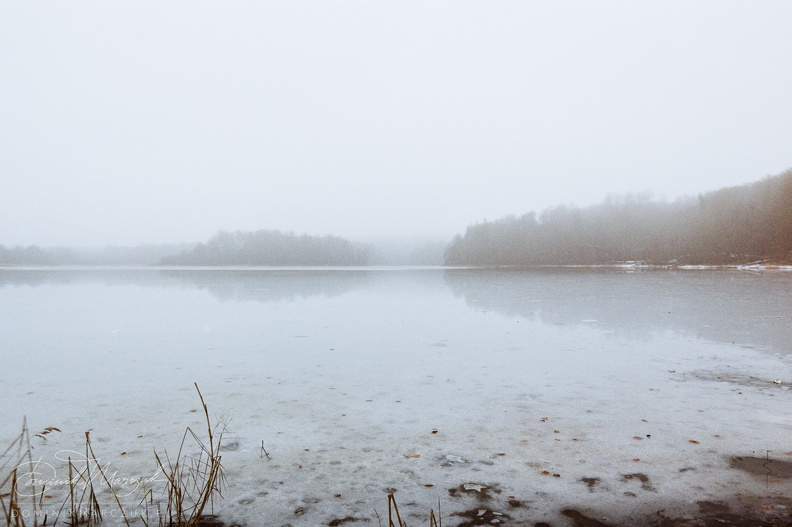
In mid-January, I went for a hike around Lake Otomińskie. I took some moody photos in the mist. Here's how I edited one of them.

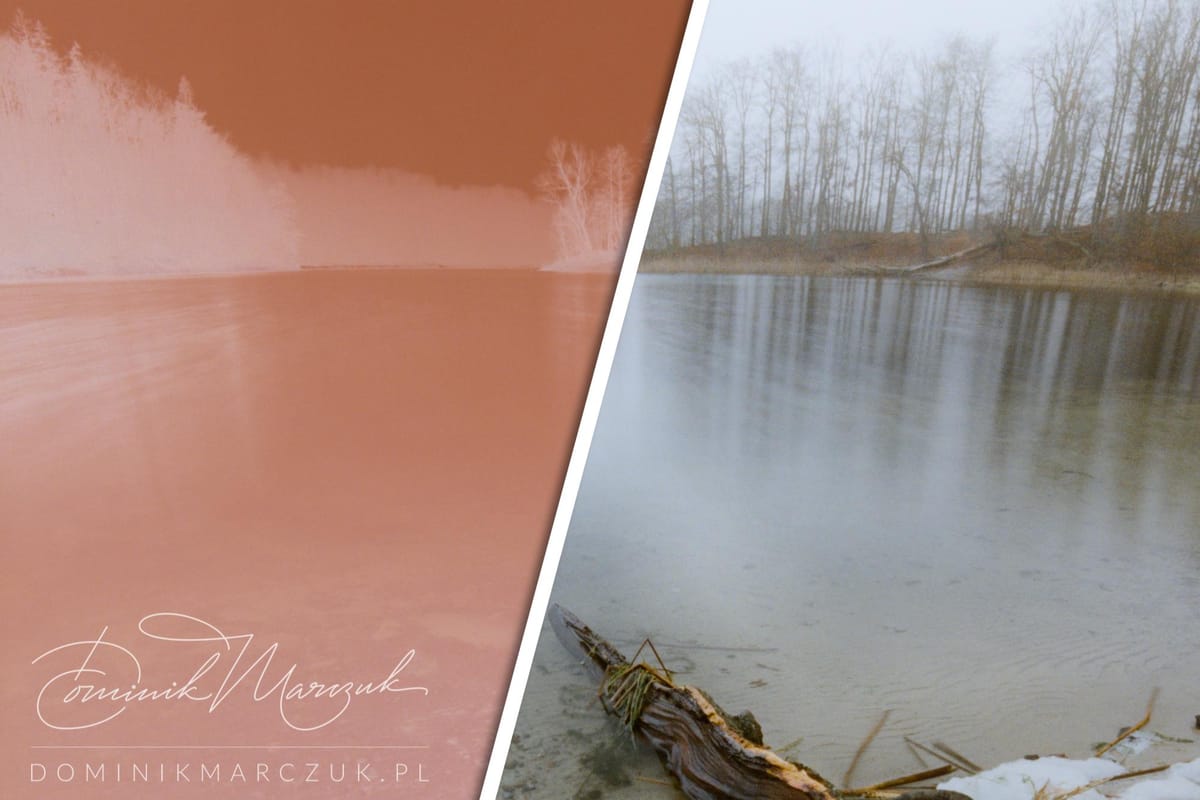
I'm always on the lookout for fog or mist. In Gdańsk, they are a rare phenomenon. However, I can often expect better conditions just a few kilometres outside the city. One such place is Otomin, a village in Gmina Kolbudy. I can get there in under 30 minutes and the area offers vast woodlands and a picturesque lake.
Recently, I went there for a hike. The weather forecast promised dense fog and a sky entirely obscured by low clouds. In short, perfect conditions for moody woodland photography. I arrived before sunrise but couldn't see the sun rising due to the cloud cover. The fog wasn't as dense as I'd expected; in the forest, there was no discernible subject separation due to fog, but the opposite shore of the lake was always enshrouded in mist. I grabbed my Nikon F100, loaded it with some Kodak Pro Image 100 and went along the shore, hunting for moody scenes.
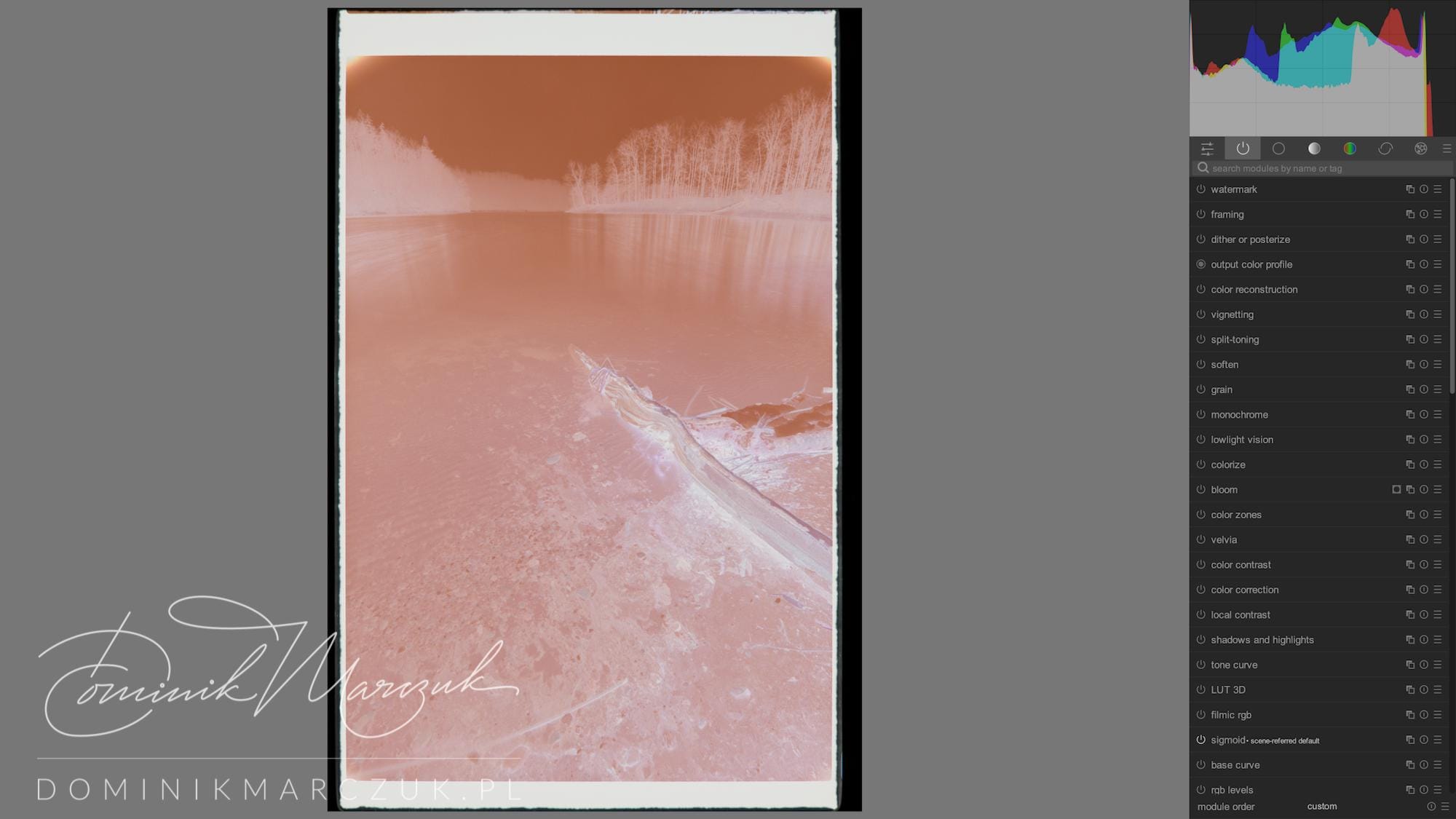
I reached a small sandy beach in a tiny bay on the lake's southern end. The bay connects to the rest of the lake via a narrow isthmus. As I stood on the beach, I noticed some foam and driftwood. The long branch in the water was pointing in the general direction of the isthmus, north-west. I composed the frame using my widest focal length, 16 mm. The polariser made the water transparent and uncovered the details of the sand and rocks underneath. I took a shot at a medium aperture and a rather fast shutter speed to freeze the motion of the waves. Then, I closed the aperture to f/16, screwed on my ND8 and took another shot, exposing it for 10 seconds (the calculated exposition was 6 seconds; I added the extra four to compensate for reciprocity failure). This long exposure turned out to be a banger. Here's the original negative:
Let me preface this part with a disclaimer. My editing process isn't exactly as streamlined as I'm going to describe here. For example, negative conversion and exposure correction are done in a few steps. I also had to use other frames from the film roll as a reference to better calibrate the negative conversion. Some steps were done in a different order and required more than one iteration. To keep things simple, I'll pretend all this didn't happen.
So, the "first" step was to get rid of the film borders and the negative holder. I needed to crop. While I was at it, I also decided to do away with the vignette at the bottom of the image. I couldn't remove the vignette at the top because there was very little space left and I didn't want to lose the tree tops.
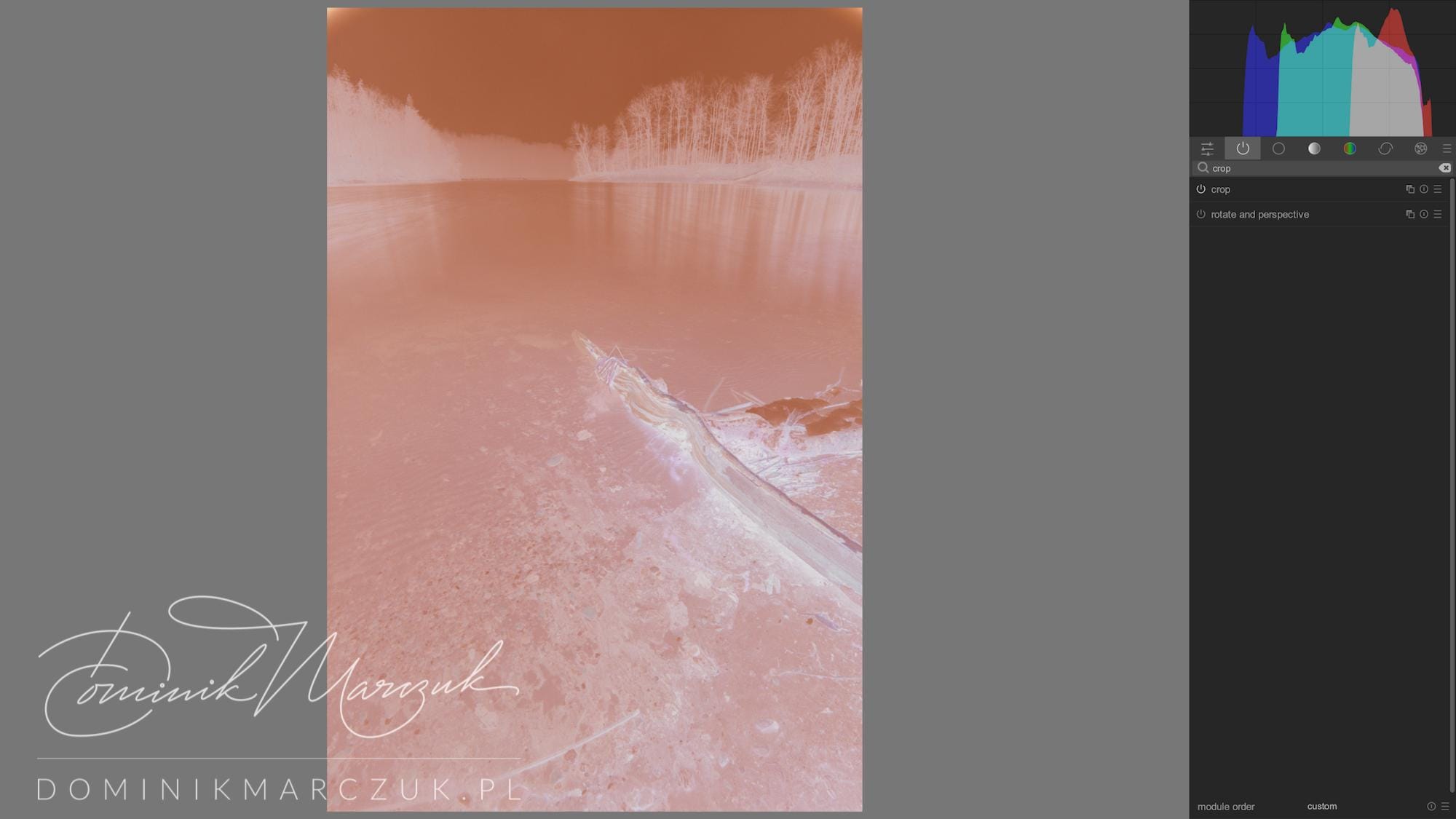
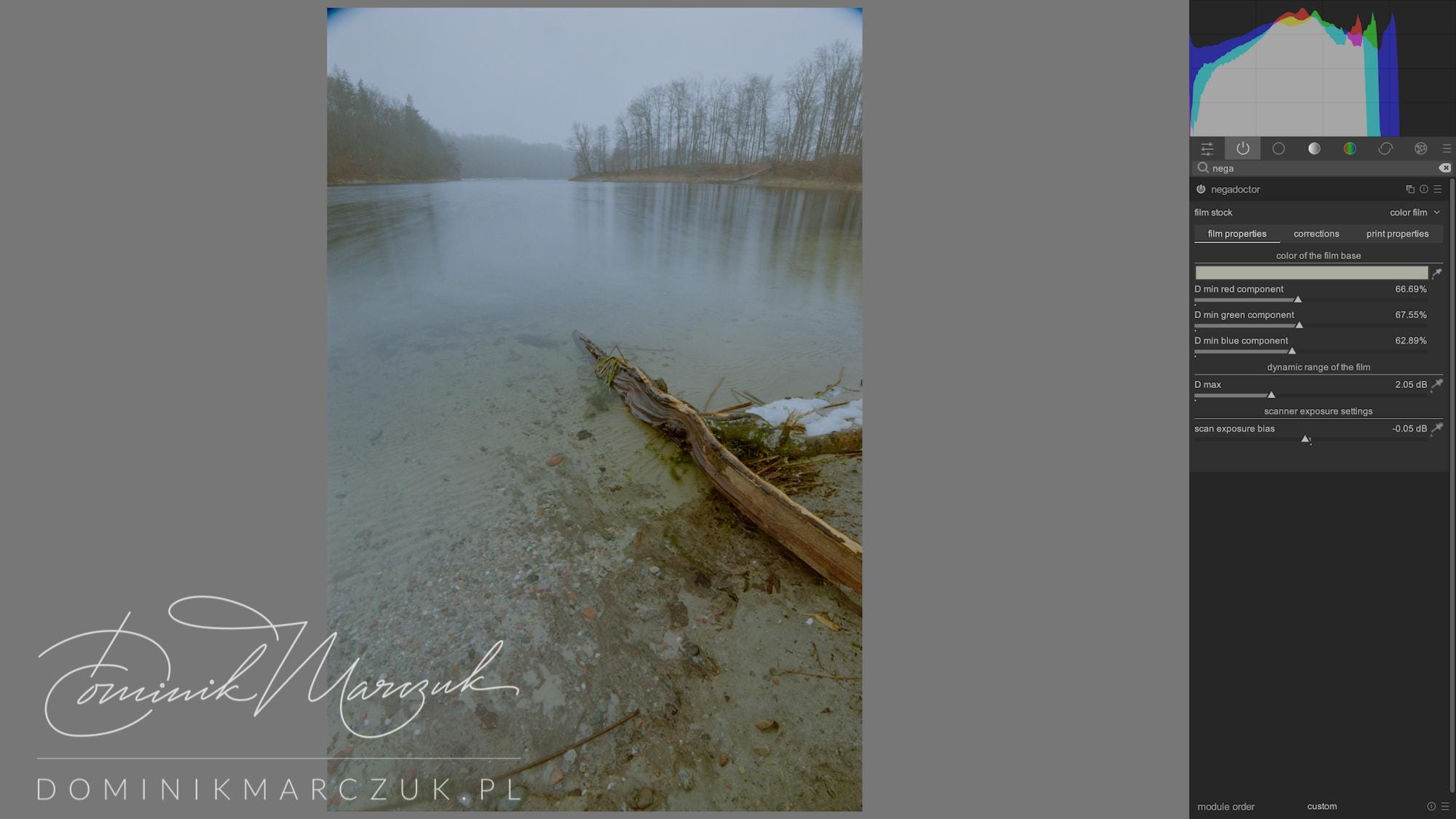
Next, I performed a negative conversion using the negadoctor module. As I've hinted before, it was mostly based on other frames in the film roll. I only slightly tweaked the highlight white balance for a neutral look without any colour cast.
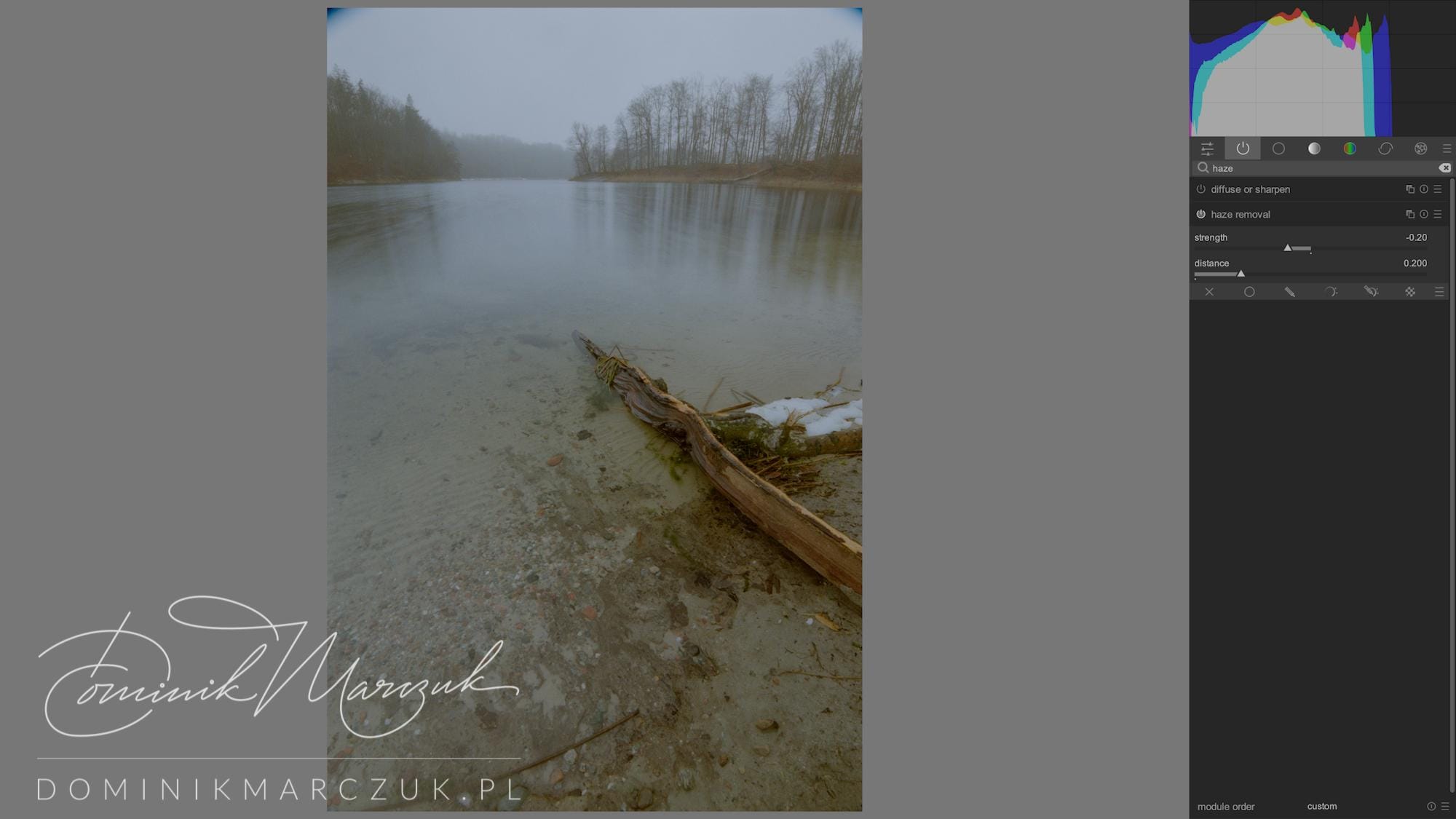
I like to apply a rehaze to all film images. At -20%, it softens the film grain and smooths the colours slightly without sacrificing sharpness. Since it's applied before negadoctor in the module chain, it slightly darkens the image.
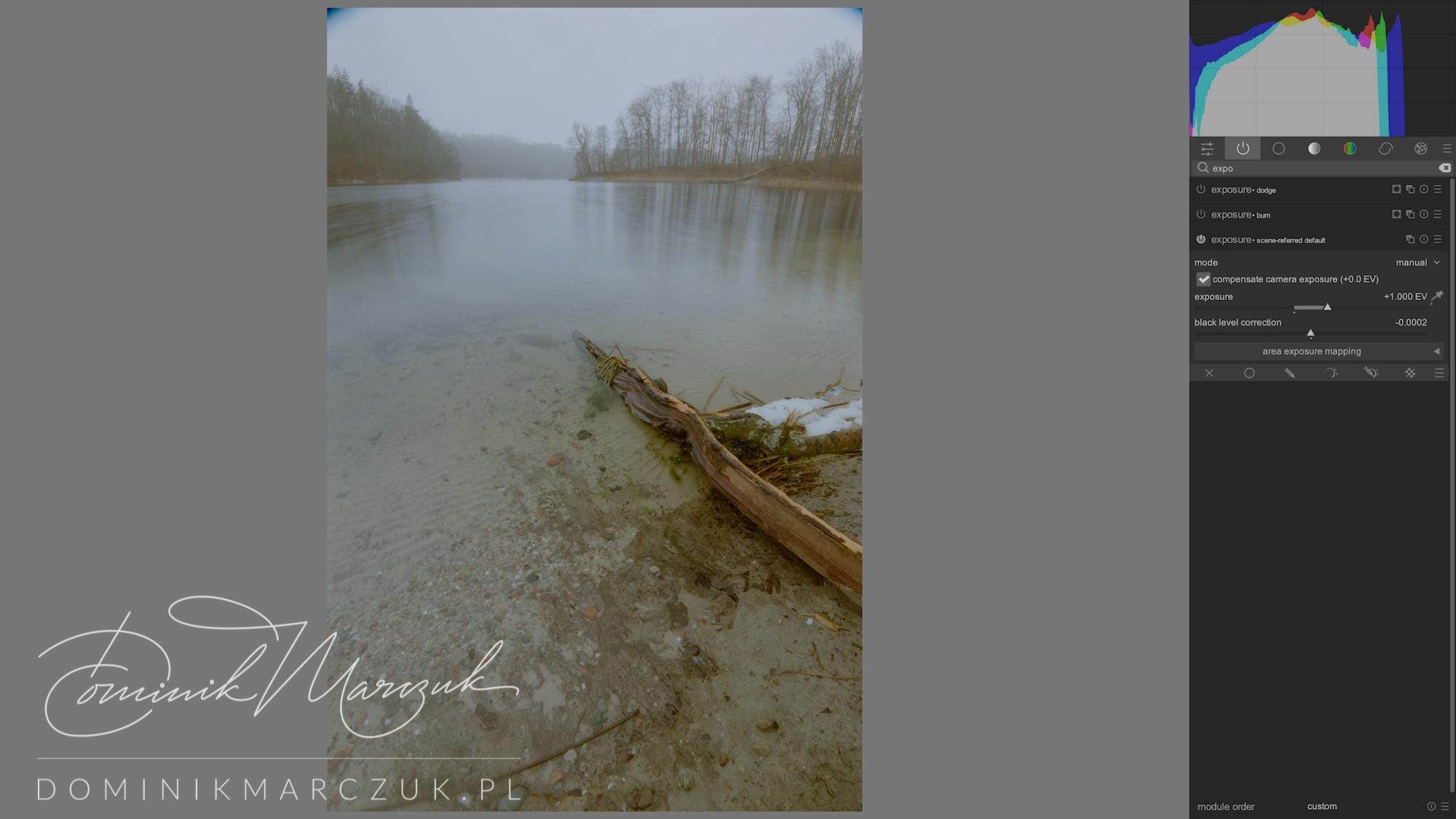
To counter the darkening of the image, I bumped the exposure by +0.3 EV to reach the final value of +1 EV. I didn't touch the black level correction as I prefer to work with the shadows and blacks in the next step.
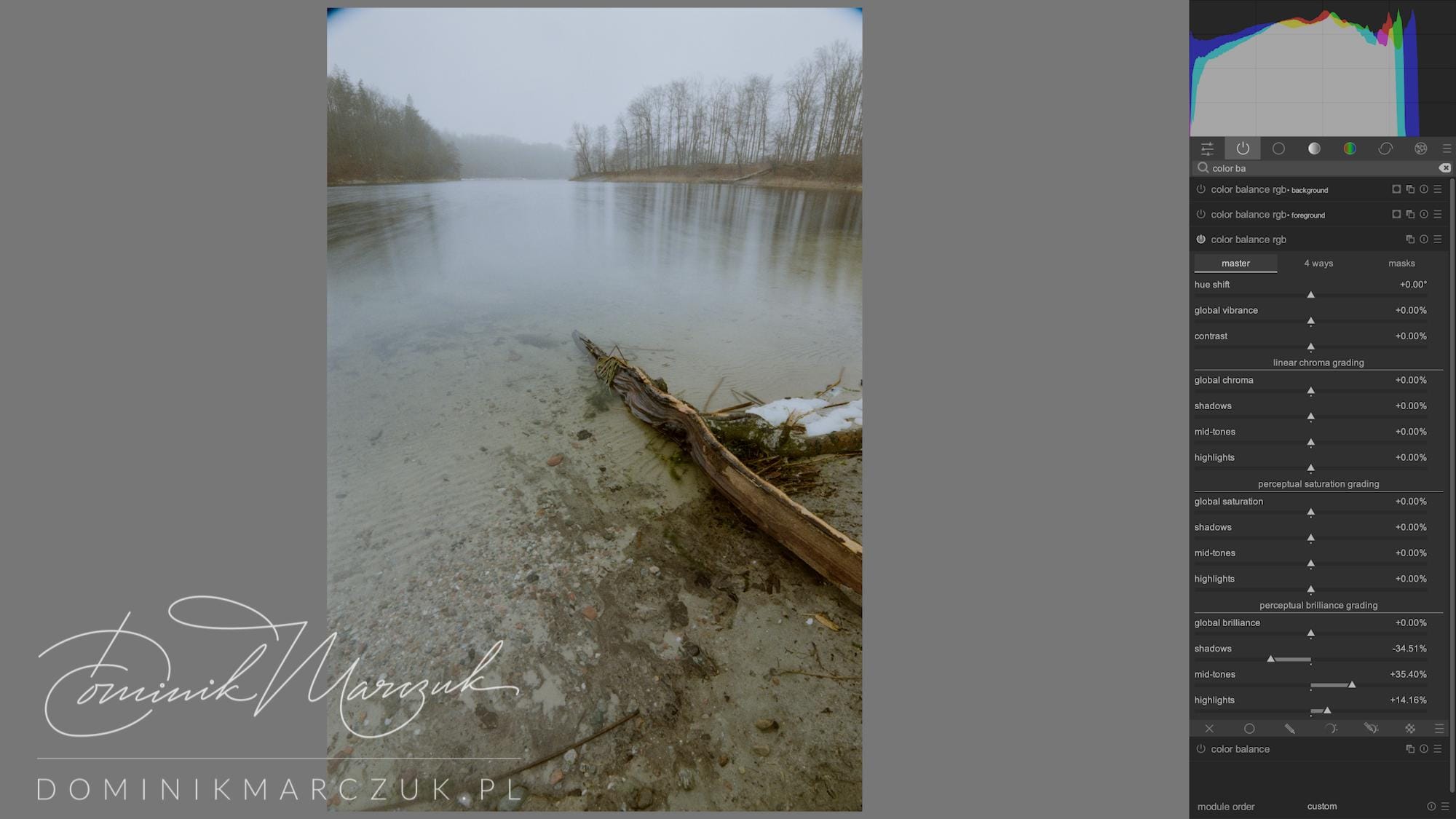
Colour balance let me achieve a more contrasty look. I separated the shadows from the midtones by a considerable distance, obtaining a somewhat high-key look. I also bumped the highlights a little, making sure to leave some wiggle room for additional tweaks later.
It was time to deal with the vignette from the stacked filters. Since the sky was uniformly coloured, it was simple to clone-stamp the dark corners.
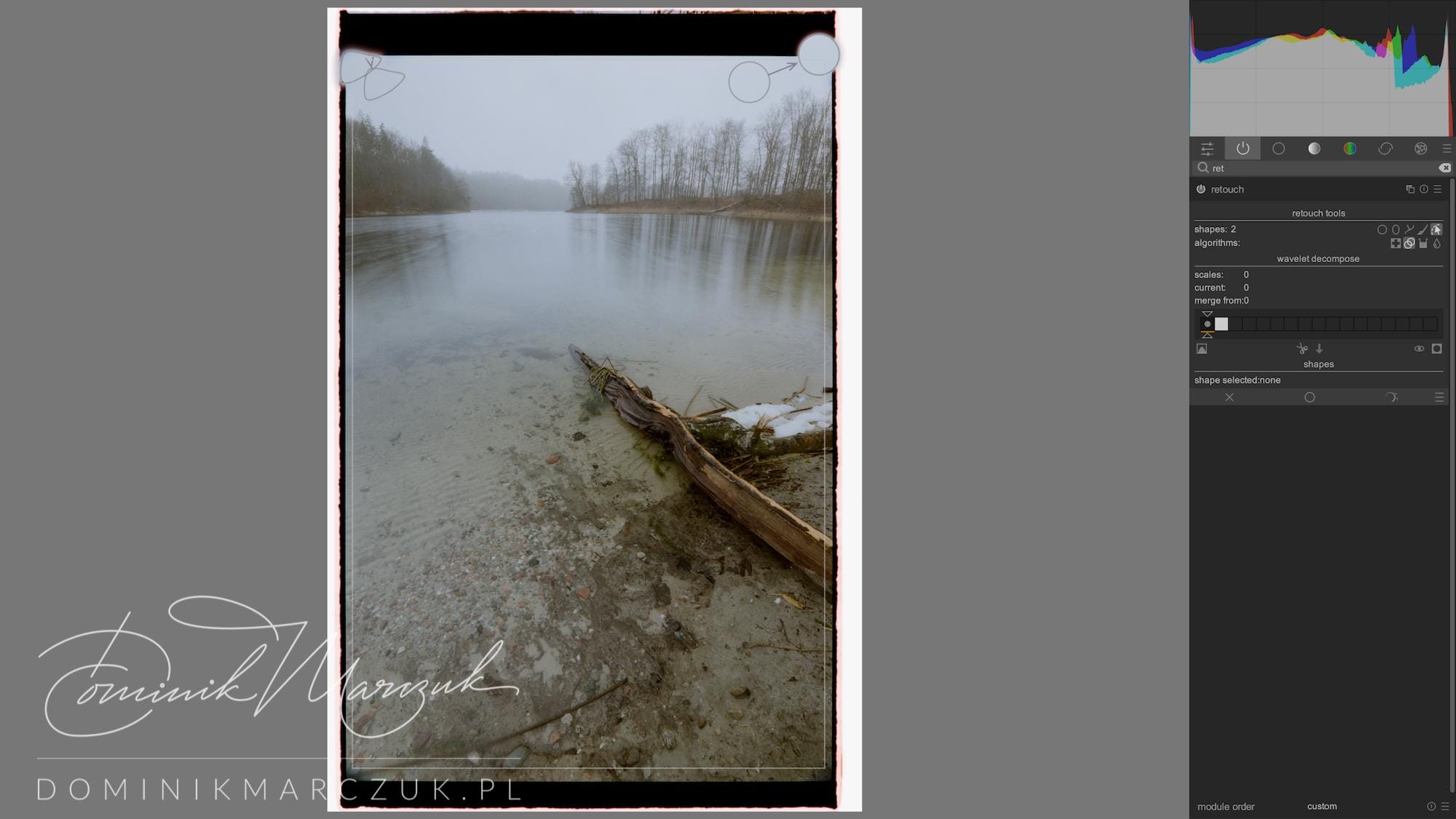
I opted for a subtle tweak to the colours. I slightly desaturated what little green there was in the image. On the other hand, I gave a small boost to the oranges and reds. The changes mainly affected the driftwood, making it pop a little more.
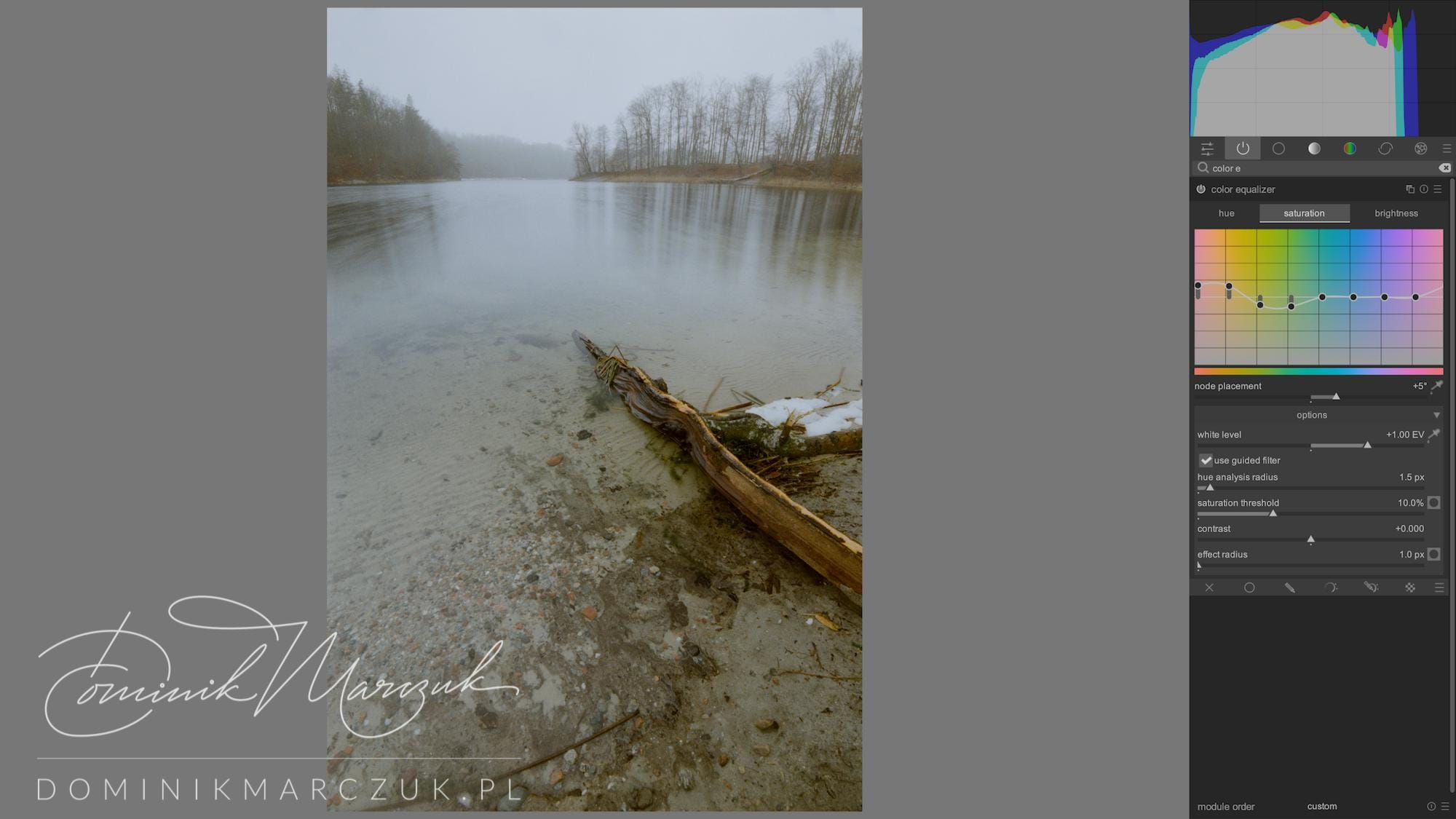
Next, I decided to give the image a little extra depth and three-dimensionality. In nature, the closer something is to the viewer, the more contrasty it is. Inversely, the farther away something is, the flatter it looks, with no true blacks due to the atmosphere getting in the way. This effect is even more apparent in misty conditions.
To achieve this, I used two instances of colour balance rgb. In the one named "foreground", I created a gradient mask at the bottom of the frame and boosted the contrast considerably. I made the effect even stronger by lowering shadows and midtones.
The other instance, called "background", used a second gradient mask at the top of the image, up to approximately the midpoint between the driftwood and the trees on the other shore. There, I lowered the contrast and applied a small boost to the highlights and midtones.
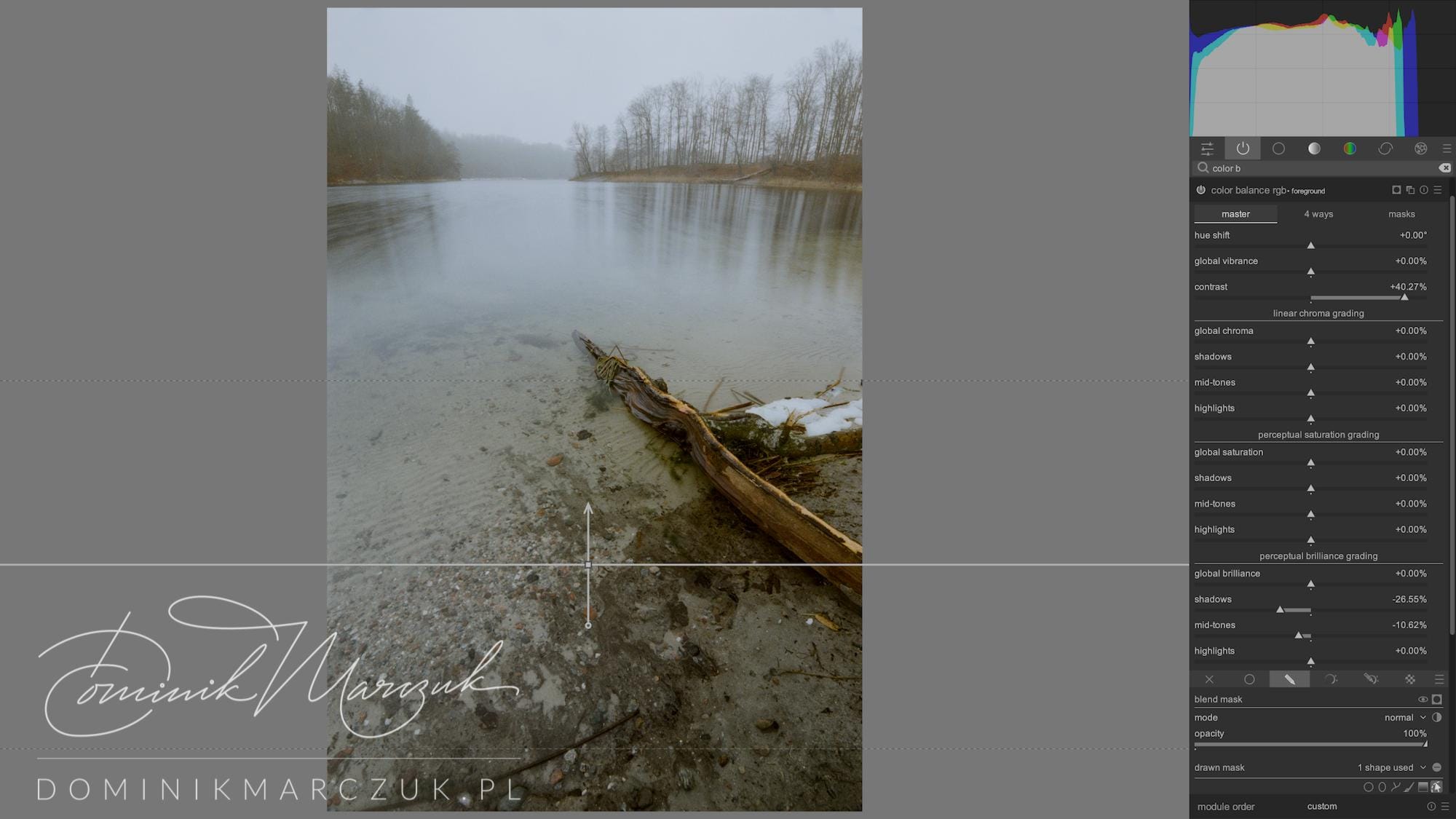
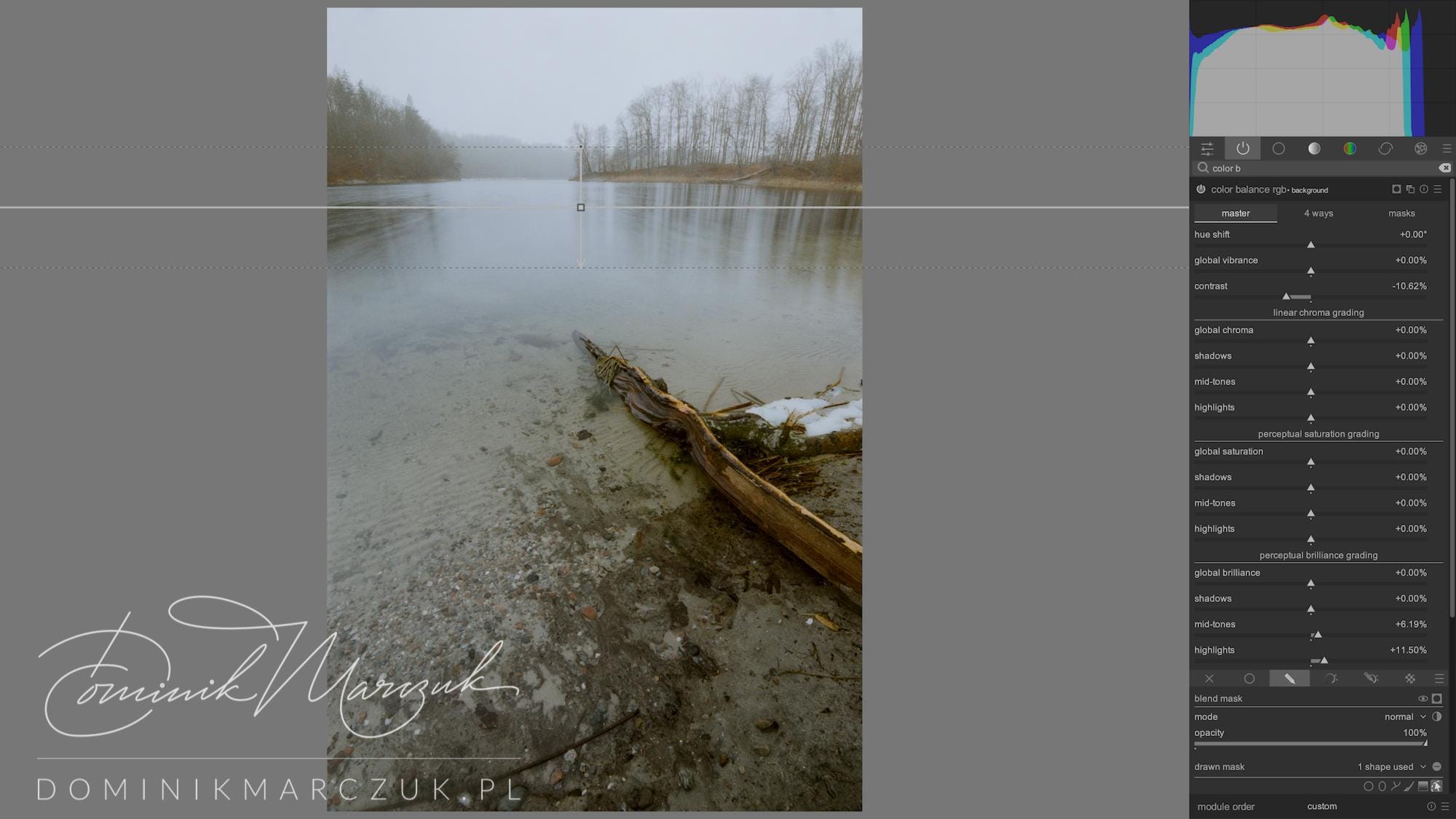
Foreground and background contrast tweaks and tonal adjustments
At this point, I was nearly done. Before publishing the image, I wanted to apply some dodging and burning to make the driftwood pop even more. I also wanted to make the lake's bottom a bit more interesting.
I started with burning. I used a few brush masks to bring out some detail in the sand. I also accentuated the shadow underneath the branch.
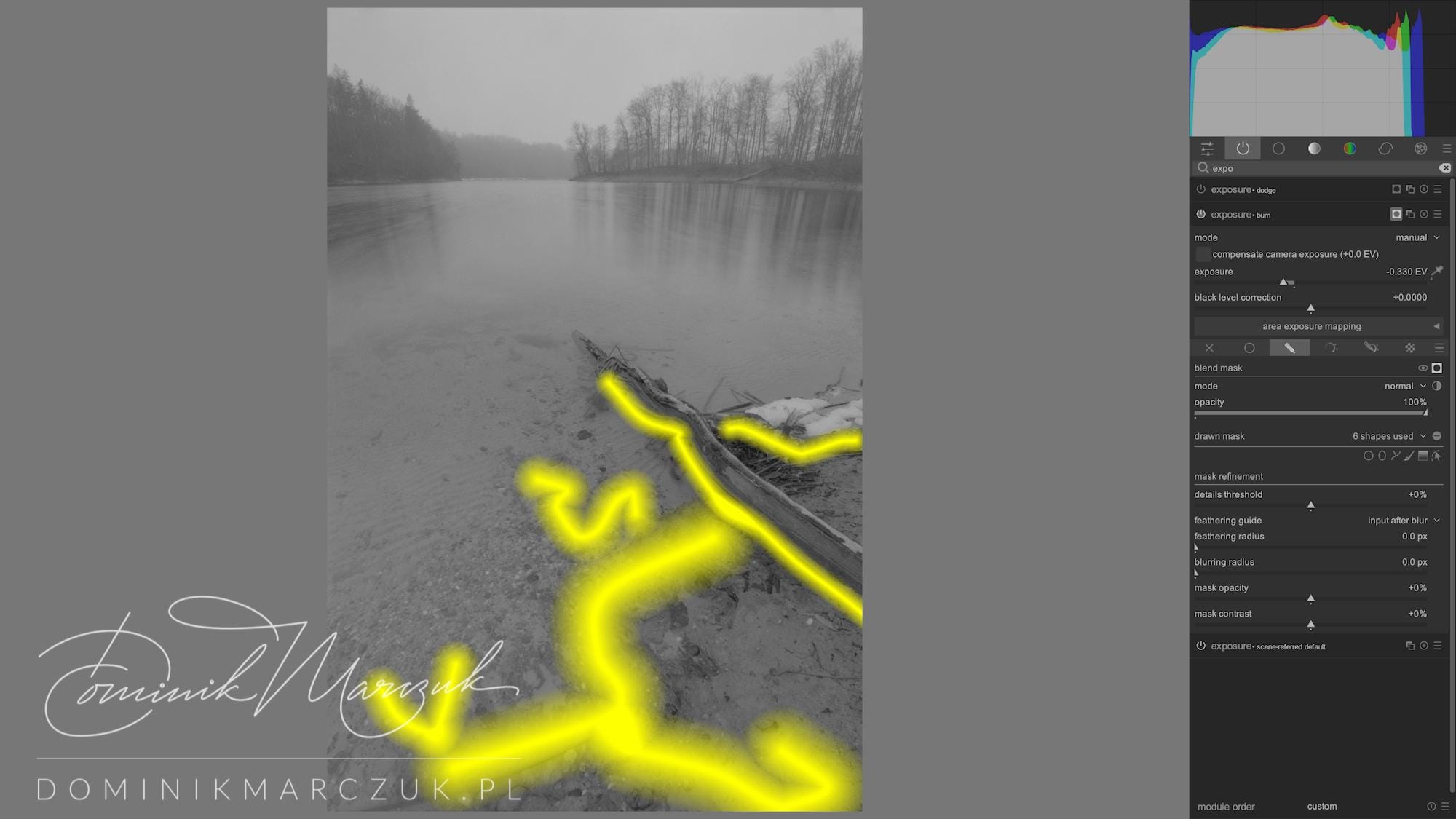
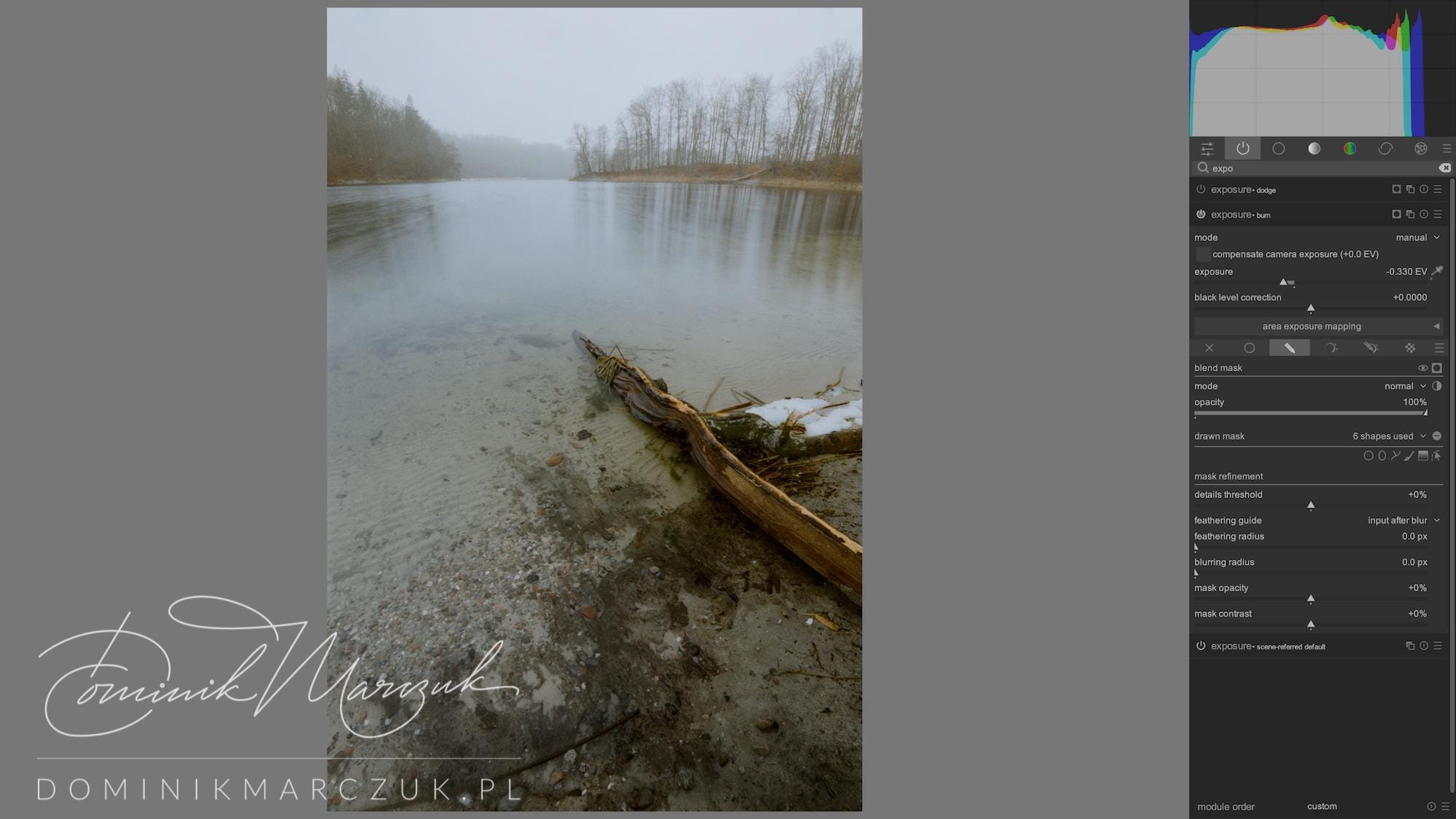
Burning: mask and effect on the image
For the dodging, I did the opposite: I added a stronger highlight on the driftwood and subtly brightened the lake in a few places to bring some contrast to an otherwise flat-looking surface.
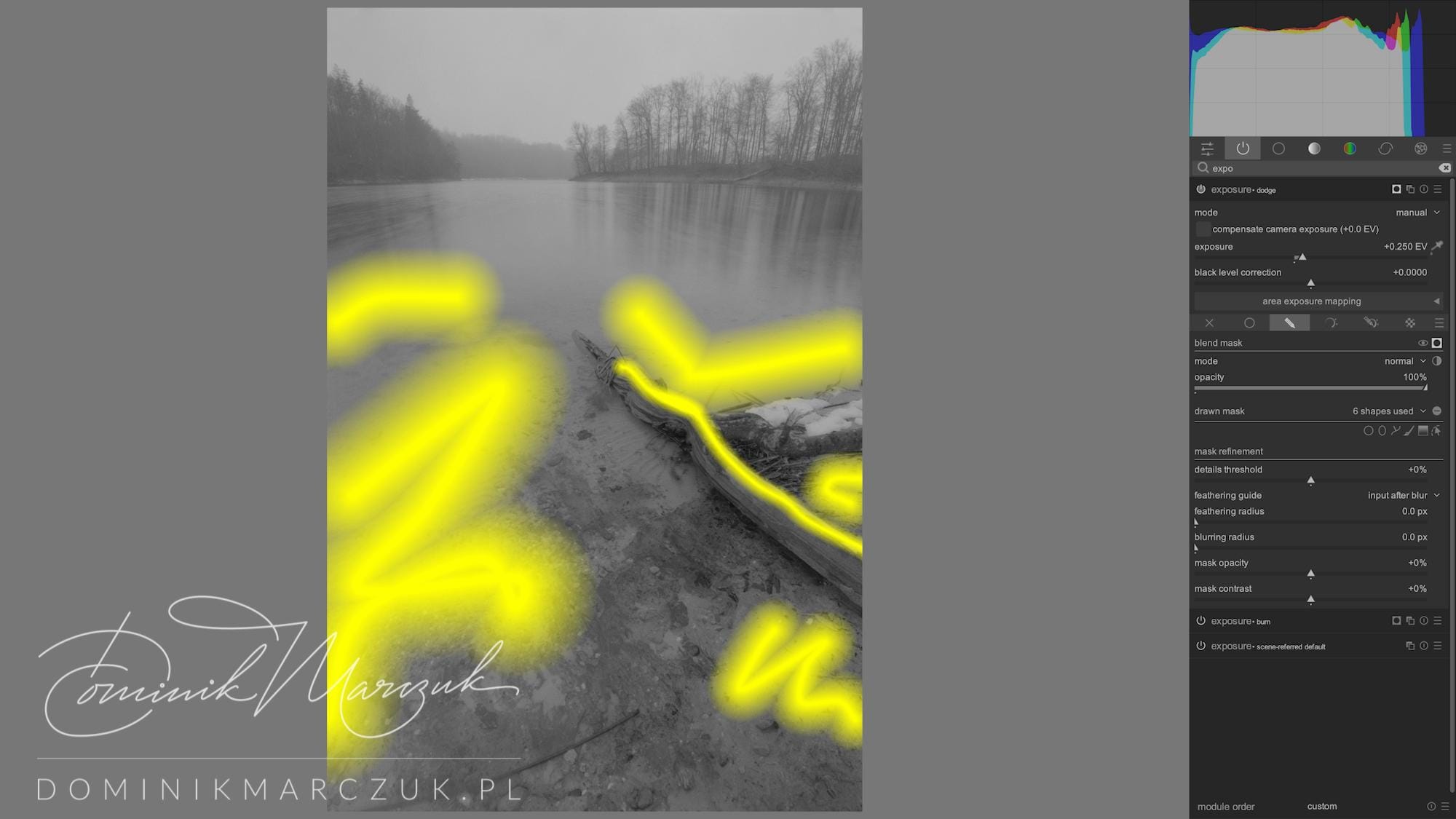
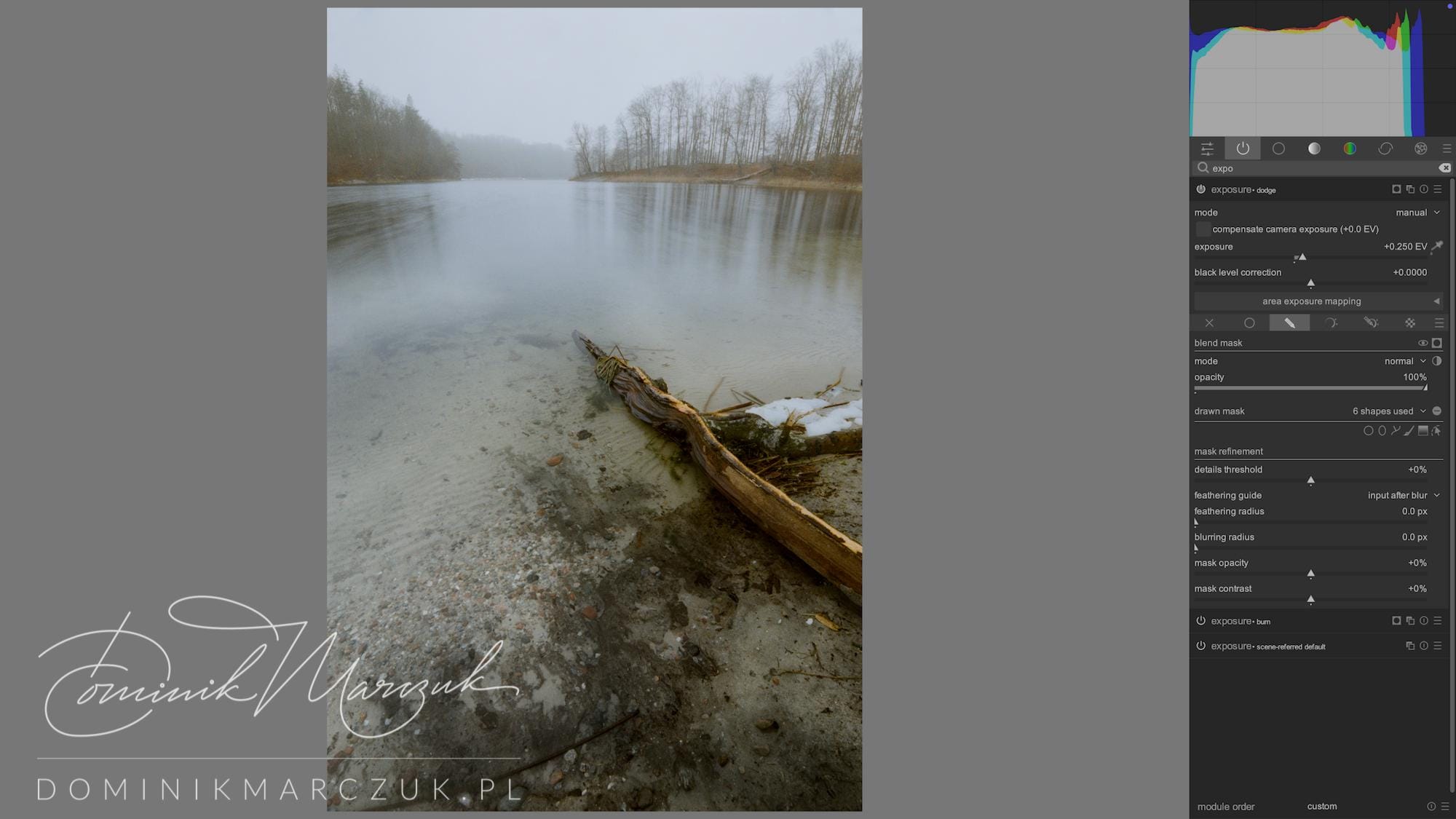
Dodging: mask and effect on the image
The final step was to add some bloom to the sky. It has a double effect: it makes the sky less interesting by brightening it and removing what little texture was left in it. Also, by spilling into the trees, it increased the effect of the fog.
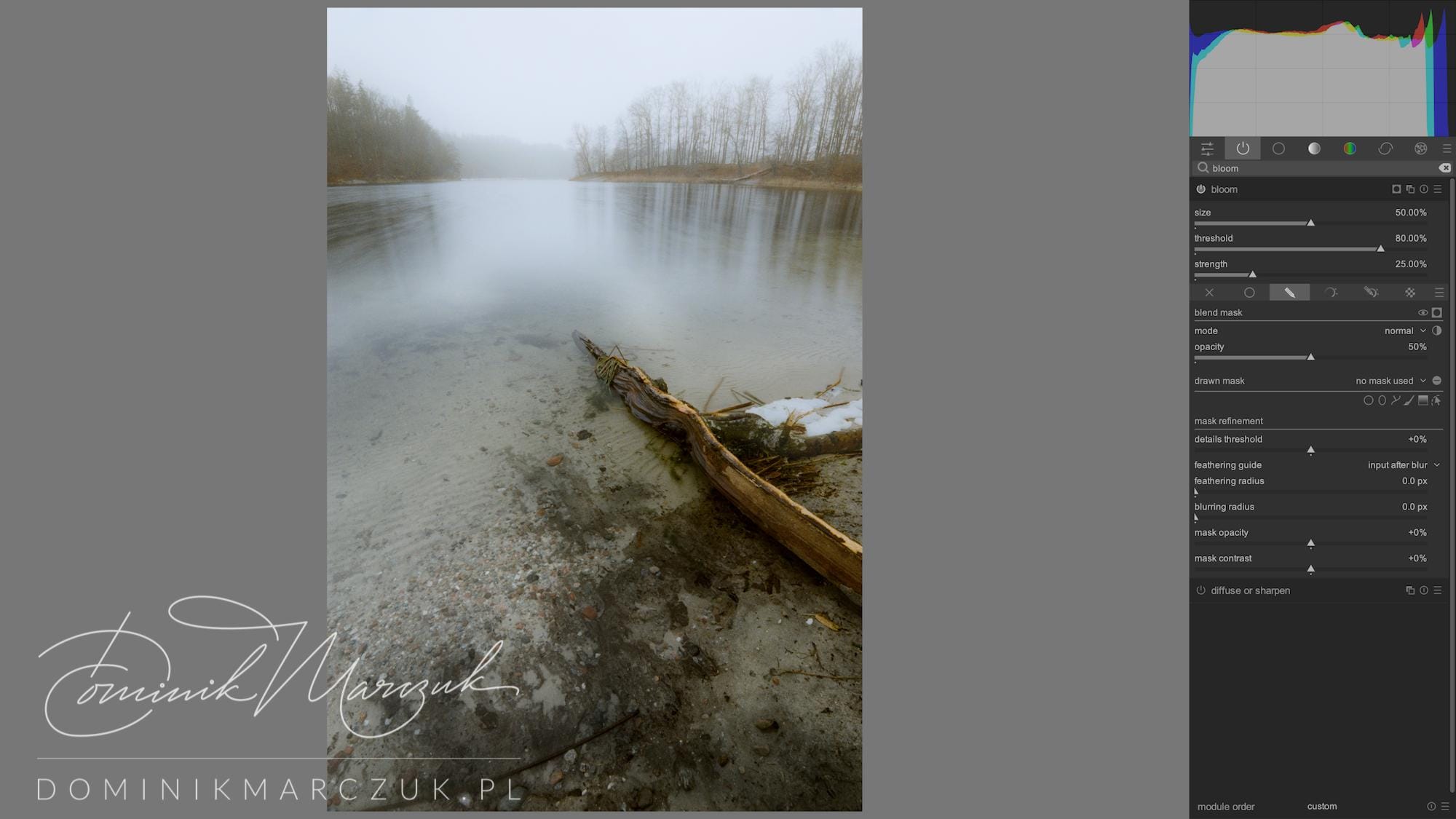
Here's a comparison of what I started with (after cropping, to make the comparison more meaningful) and the final edit.
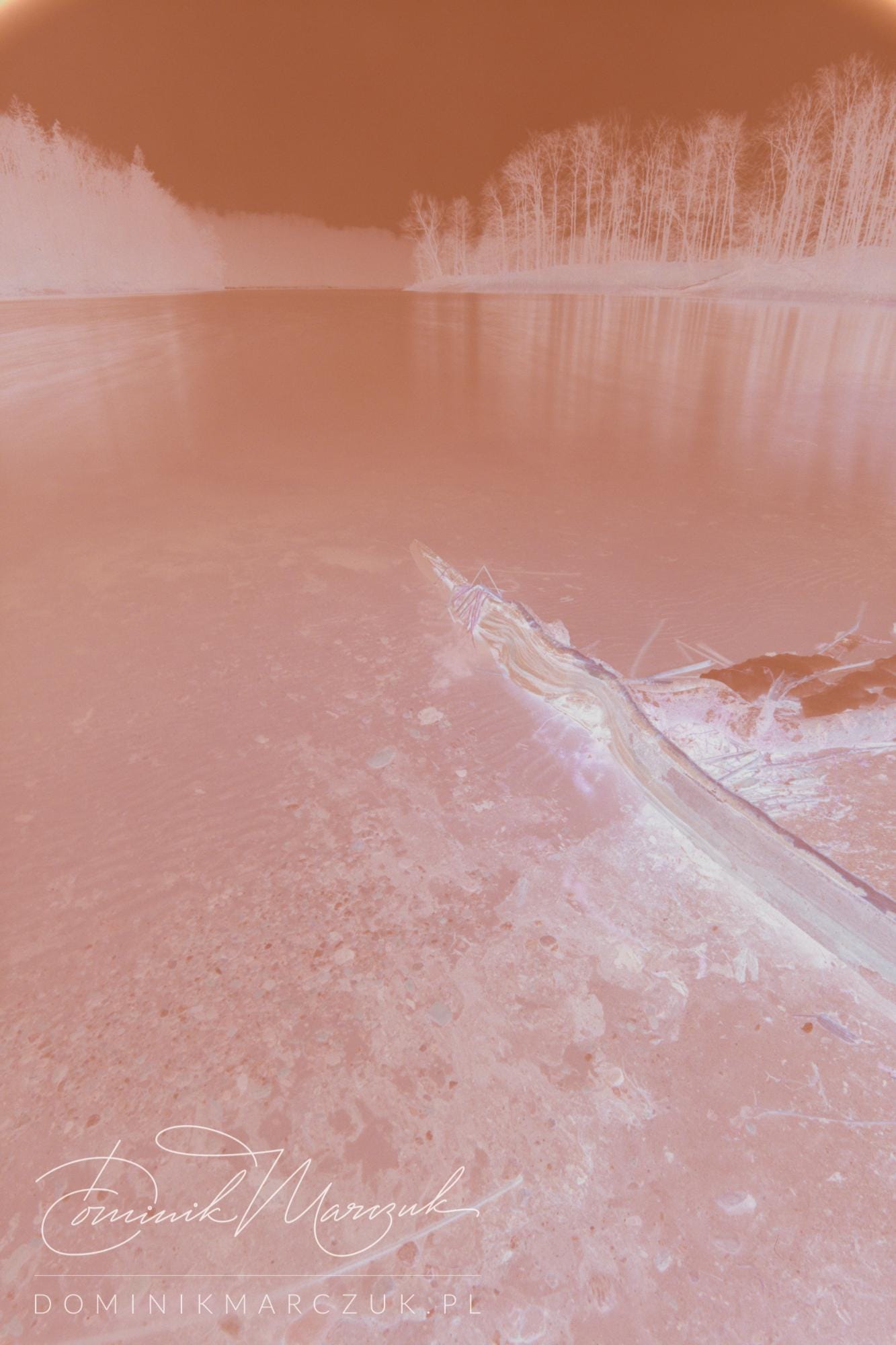
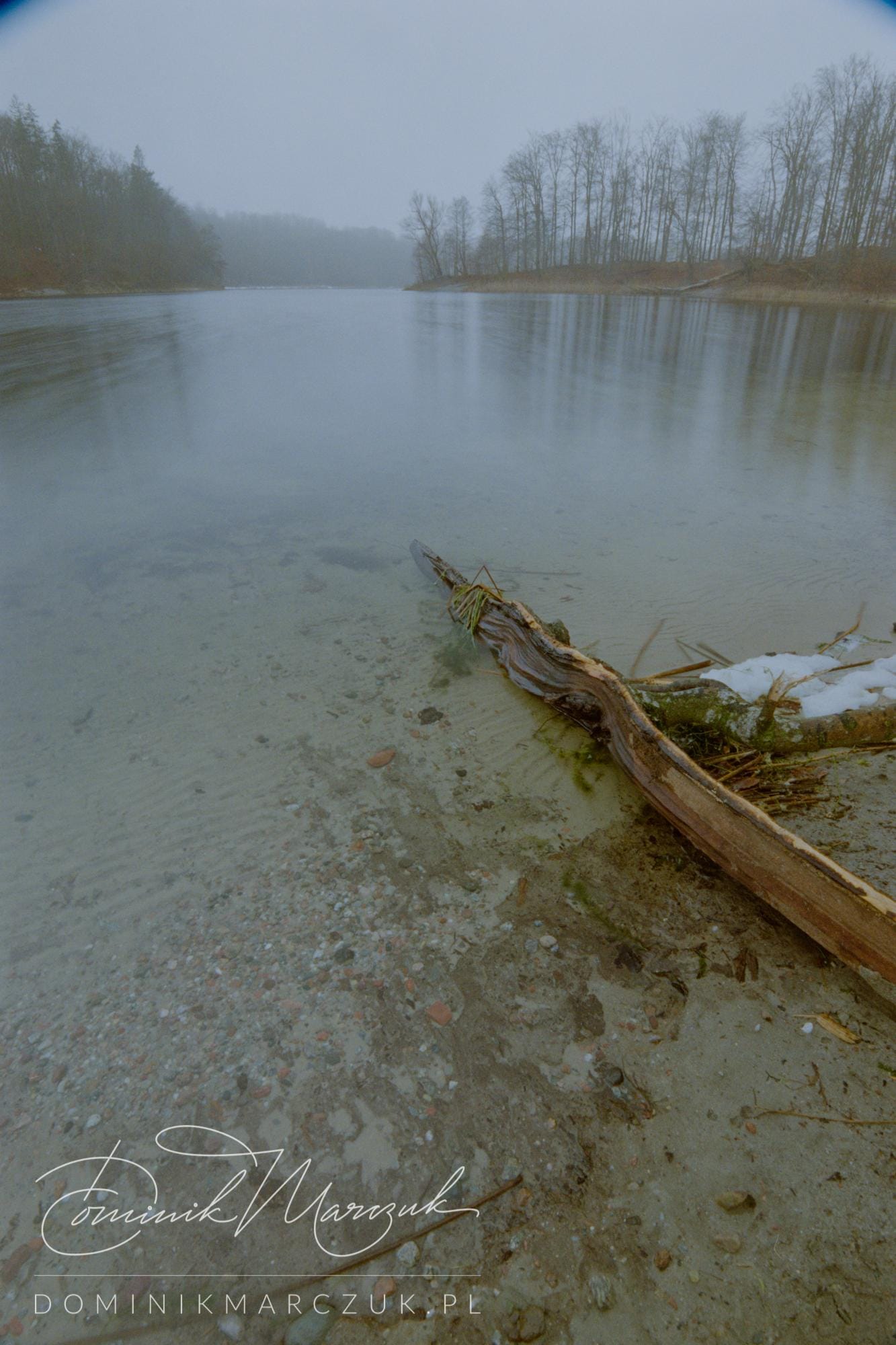
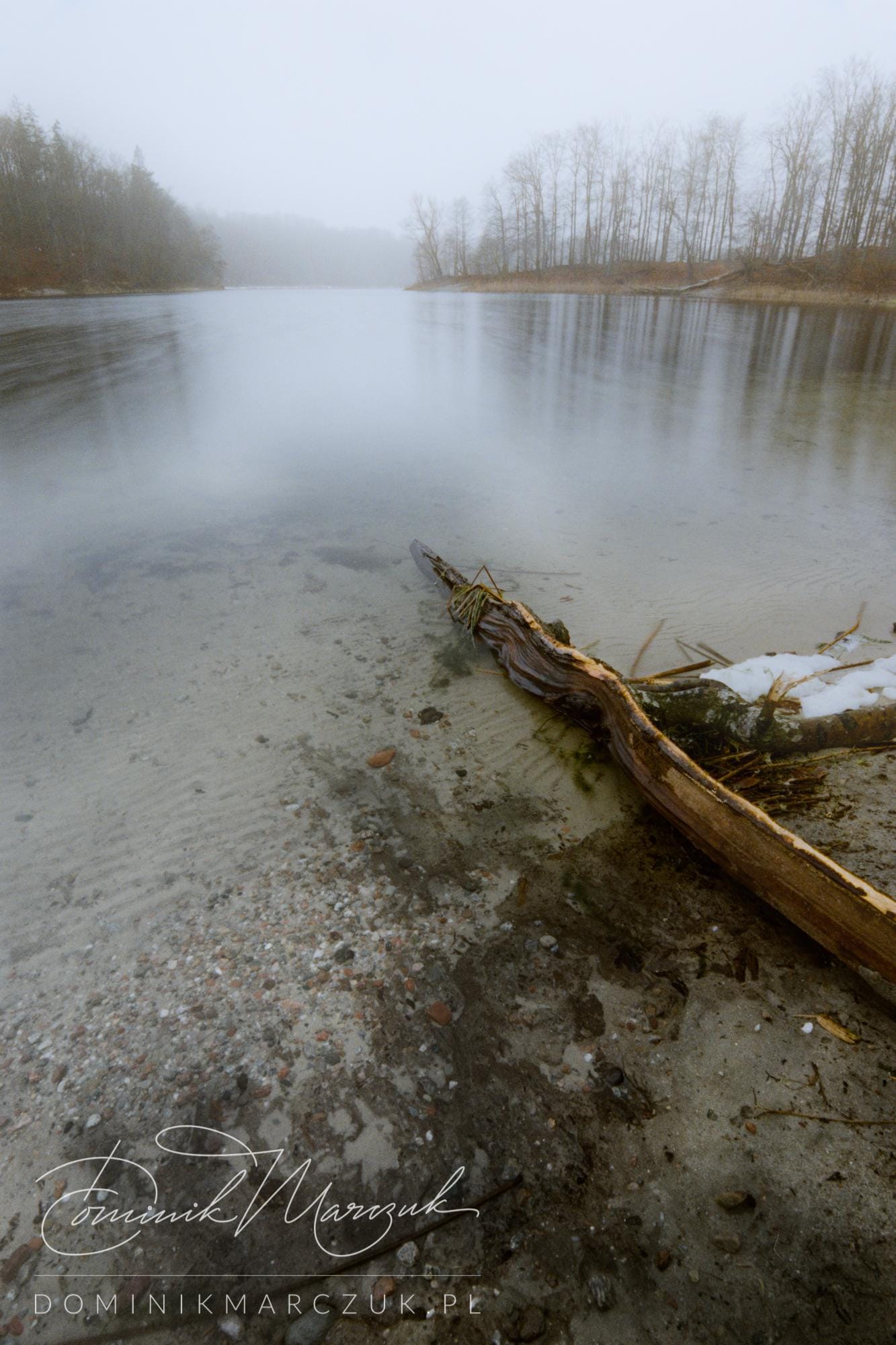
Unconverted negative vs. unedited positive vs. finished edit
I am quite happy with how the photo turned out. The composition is interesting and I reckon I managed to guide the viewer's eye through the driftwood up to the fog-bound isthmus, without letting the waves attract any attention on the way. I consider this one of my better shots.
Here's the photo, plus two others taken that day.
 Dominik Marczuk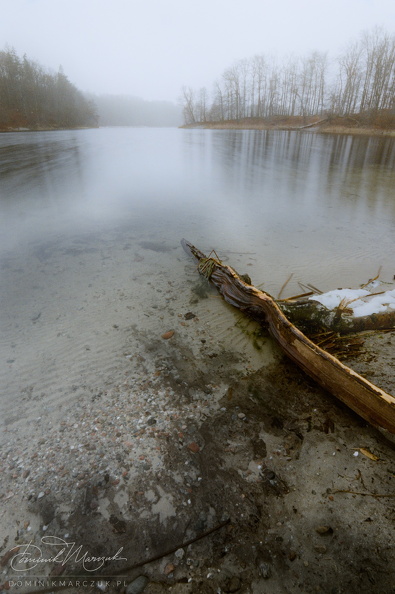
 Dominik Marczuk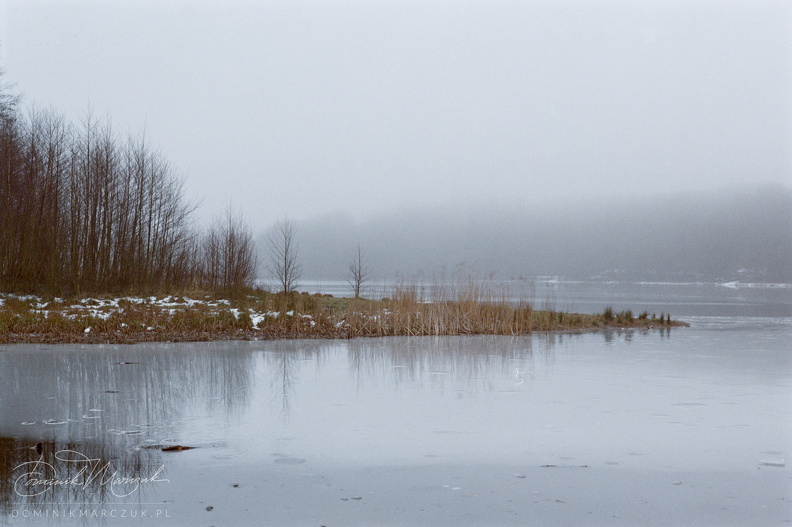
 Dominik Marczuk